Monday, 28 November 2011

Cinematography

In preparation for the creation of my teaser trailer/poster/magazine cover I thought it would be useful to study the cinematography in two vastly different films. The look/mis-en-scene of a film is very important, for my own film I will be going for more of a 'Tyrannosaur' type style rather than a complicated, high budget, picturesque film like 'Inception'. This distinction is important as it partly dictates where a film would be shown, in smaller arthouse cinema's you usually find lower budget films whereas in large cinema's e.g. Odeon popular blockbuster films are quite usually exhibited. This is due to the scale of the film and it's budget. Films such as Inception are full of special effects, CGI, big name actors and action, the full effect of this would not be suitable on a small screen, through condensing the size of the screen the splendor of the scenes would not be fully appreciated. This contrasts to films with a small budget and lesser known actors.

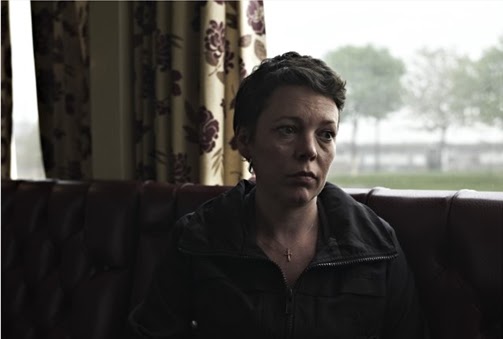
The film Tyrannosaur, a typical arthouse film, focuses more on the power of acting and atmosphere to attract its audience rather than effects and scale. In my opinion, the lower budget films have slightly better acting, this is because they cannot rely on effects and CGI to carry the audience through the film. Arthouse cinema's are usually quite small and homely, they create a sense of nostalgia as the screening rooms are much more intimate and condensed. This creates the effect of sitting in a living room or somewhere like home, which allows the audience to relax and connect with the film. Acting in lower budget films, as I said is very important and effective, I believe this is appreciated fully in a small screen as the audience has much more intimacy with the film, with none of the noise and food crunching that you find in large cinema's. Here are some examples of cinematography in the two films;


These images are all from different scenes in the film Inception, as you can see they all rely on a sense of grandeur and hyperreality, this is emphasised by the large scale and special effects. The images are very 
powerful because of their surrealty and the sense of wonder around them (as they are based in dreams). The film would be enjoyable simply because of this imagery that is featured throughout, it would still be effective even if the acting wasn't great. This is seen in a lot of high budget films who are popular mostly because of their effects rather than the level of acting or storyline (thor, tron, generally marvel films...). Only in my opinion of course.


These images from the film Tyrannasaur appear very raw and gritty, which contrasts to the grand imagery in Inception. These images are all set in everyday locations, which need no special effects or large budget. The images focus on the actors rather than the surrounding, emphasising emotion and atmosphere. The films are very different in style, as you can see the colour and surroundings here are all slightly desaturated and dull, which related to the dark themes in the story. Inception focuses on dreams and the impossible, which is most effective when filled with colour and effects.
For my own film, as it will be arthouse in style and on a low budget may be similiar in appearance to that of Tyrannosaur, This is England or perhaps Dead Man's Shoes. I will look at some of the film posters and perhaps magazine covers (if there are any) for these films, to try and find inspiration from their styling and photography.
When looking at psychological horrors it is clear that a lot of the imagery is dark and dismal, to conform with the horror theme. Evil and darkness is a recurring subject matter in this genre of film, and so the imagery will often accomodate to this. I believe my locations will reflect this well, being of dark and sinister nature, I will go into this further on a separate post.
The cinematography in my own piece will act as a basis for my magazine cover and film poster, I plan on using images from the trailer to use in these artifacts. This will link all three products together and will generate interest for the film.

Tuesday, 22 November 2011

Script

As I am creating a 'teaser' trailer my script for the production will be very short and simple, to tease the audience and not reveal too much of the plot.
A teaser exposes the audience to a hook and enigma, it is a promotional tool to persuade the target audience to purchase tickets - this is done by generating conversation, desire and intrigue in the audience. I hope to create this through the ambiguous imagery and conversation in the trailer. This will be mimicked in my ancillary products, the front cover of the magazine will have an image from the second scene of the trailer, it is purposefully mysterious to attract not only film fans but photography fans also - the image will not be obvious as one of that from a film. The poster will contrast to the peaceful and serene setting of the magazine cover, it will show the darker side to the film's theme enticing the audience to discover the plot and narrative. I may use one of the lines in the script for the poster/magazine, to link all three together, like a puzzle that the audience has to solve. I wanted to create the magazine and poster as polar opposites in terms of imagery and lighting, to reflect the conflict of good and evil, and the psychological split in my main character.
Through my research of teaser trailers I have found that dialogue is very limited as to create a feeling of mystery or suspense, it is normally something vaguely related to the story, intriguing without giving away the game.
I am planning on only using dialogue in the first few seconds of the trailer, before the music kicks in for dramatic effect. I have reconsidered using no sound in the trailer apart from music, I want to add in a scream near the end of the trailer, and perhaps some wildlife noises (e.g. leaves, birds, wind) through specific scenes.
My trailer will begin in a clinical/sterile looking room, with the noise of a tape recorder buzzing. This will suggest to the audience maybe a prison, psychiatric ward or somewhere else, I want to make it purposefully ambiguous to create mystery. The female character will be in shot, with the camera coming from the 'man's' perspective, as he begins to speak to her. Not being able to see who is talking will keep the mystery aspect up.


Man: ...and how did you feel when you discovered you were... alone.
Woman: I... I felt myself letting go.


This is the point where the classical music will begin, leading into our first setting. The mystery is heightened through the lack of dialogue, the text may suggest several plots or outcomes.
Somewhere in the middle of the trailer I will have a screen with only text on it, which partially suggests what the narrative is about.

When someone leaves this world, what do they leave behind?


This could suggest death or disappearance, it will be left for the audience to decide and ponder what the story actually is.
28 November 2011 16:38

Sunday, 20 November 2011

Teaser Trailers

These are all teaser trailers that I've found which have been featured during intervals of the Superbowl in America, this is a prime spot for trailers to be aired as its draws in around 111 million viewers each season. 


http://www.youtube.com/watch?v=ZnE4uzT7sro - Captain America: The First Avenger
http://www.youtube.com/watch?v=j1CzuaFQ87M - Super 8
http://www.youtube.com/watch?v=GPRv4Out7X8 - Transformers: Dark of the Moon


These are all high budget, high grossing films which are shown, you wouldn't find a small independent film anywhere near here. This shows the difference between blockbuster teaser spots and lower budget or more niche genre films. 


Often teaser trailers are shown before movies at the cinema, or perhaps between programmes on TV. I have found it quite difficult to locate teaser trailers for psychological horrors, this may be because it is primarily blockbuster type films that have the need for a teaser campaign. 


http://www.youtube.com/watch?v=lXO0he1WjYw - The Sixth Sense
http://www.youtube.com/watch?v=rJztRnDxdM8 - Jacob's Ladder
http://www.youtube.com/watch?v=HZu1cTg-xUM - The Blair Witch Project


The Blair Witch Project trailer is a good example of a teaser trailer, it shows quick flashes of some scenes in the film, but is mostly noise and some speech which gives it a mysterious and ambiguous quality. The trailer does not explicitly show what the film is about, but draws audiences in through the is it real, is it not factor. It may intrigue as it appears frightening yet you do not know what the cause of this is. 


Tuesday, 15 November 2011

Focus Group

I have identified 4 people so far that would be suitable for my focus group, these are Joe (18), Kieron (17), Troy (27), Cem (19). Having this range of ages will be useful for my research as I can attempt to make my products suitable for most of my target audience.
I will be asking this group what they think of my initial storyline/ideas for the teaser trailer, and what they make of the poster/magazine. I can collect the data I find to improve upon my work. I will be both videoing and writing about our progress.

Tuesday, 8 November 2011

What actually is a teaser trailer?

A teaser trailer is a short trailer used to advertise an upcoming film, television program, video game or similar, usually released long in advance of the product, so as to "tease" the audience.

Movie teasers, unlike typical theatrical trailers, are usually very short in 
length (between 30–60 seconds) and usually contain little, if any, actual footage from the film. Their purpose is less to tell the audience about a movie's content than simply to let them know that the movie is coming up in the near future, and to add to the hype of the upcoming release. Teaser trailers today are increasingly focused on internet downloading and the convention circuit.

-Information from Wikipedia


Cloverfield + Transformers

The teaser trailer for the film Cloverfield was originally shown before Transformers in cinemas, although being conventionally longer than the usual 30-60 seconds it contains most of the attributes of a teaser. Here you can see the teaser: http://www.youtube.com/watch?v=IqQzvfn_s30&NR=1. Only the producer's name and the date of release are shown, not the actual title, adding to it's mystery. Both of the films have quite similar themes/genres, they fall into the sci-fi category, whilst crossing over with a few others, but are both essentially driven by the science fiction themes. The films are both about some kind of invasion, whether it be robot or monster, linking them together. Both Cloverfield and Transformers are very high budgeted blockbuster type movies, which likely be shown in large scale cinema's attracting a large audience. Showing the teaser for Cloverfield before such a popular film like Transformers would have cost a great deal in advertising, and would guarantee good publicity. It seems that Transformers supported this Cloverfield in more ways than one, in the actual film the poster for Cloverfield is shown in the room of Shia Lebeouf's character's room.

This example is similar to the exhibition of The Incredibles, which was featured in front of Finding Nemo, 18 months prior to it's release. Both films were distributed my Walt Disney and are primarily aimed at young audiences, fitting them well together.

When exhibiting my own teaser trailer I would have to consider what upcoming films would fit in well with my own, it would need to be some form of horror/thriller/drama to be suitable for feature.

Tuesday, 25 October 2011

Deconstructing Psychological Horrors

Rosemary's Baby (1968)

To begin with, the opening song in Rosemary's Baby is a clear signifier for the 'horrory' genre you are about to view, the song is haunting and slightly creepy which fits in well http://www.youtube.com/watch?v=VQFwW8eAy4U. It is also similar to the lullaby in Pan's Labyrinth, which is in the same sort of genre.

 The film is set in a large apartment building, the building itself is very tall and overpowering, with castle like features. This shot shows the audience the main location, it has a creepy and haunted house-esque look to it.

A large majority of the film is set in different apartments within the building, it is a familiar location that would usually signify safety and comfort. The evil in the film infiltrates these safe surroundings. Through using a location which the audience can relate too, it brings them closer to the action making them feel ill at ease.


One of the mysteries in the film is why the door at the bottom of the hallway had been blocked, behind it all seems normal. This is until Rosemary discovers it's real purpose. This ominous doorway acts as another creepy factor in the apartment block, besides the history of witches devouring children. The addition of this adds suspense to the story, as to what the cupboards purpose is.
There is some surreal and ghostly imagery used such as in the scene where the devil rapes Rosemary. Psychological horrors often use shadows and darkness to disorientate the viewer and to add to its 'horrificness'. These weird images confused the viewer as they do not know if what is happening is real or not.

This is another surreal moment as the Devil is impregnating Rosemary, she seems to be consumed in some green fog, perhaps signifying the evil entering her. It again adds to the disorientation and dream-like aspect of the scene.

 There is also some disturbing and rather disgusting imagery used in the film, such as when Rosemary eats raw liver. It is quite uncomfortable to watch as it looks very unpleasant, and almost cannibalistic. This is a simple yet effective scene, the colour of the bloody red contrasts with Rosemary's innocent white face, dress and surroundings. It also begins to show that the darker force inside of her is making her do odd things.
Mental isolation is a common convention of psychological horror's, this is featured explicitly through the second half of the film. Rosemary's peers begin to drop around her, and she becomes trapped with her over friendly neighbors and increasingly suspicious behaving husband. No-one believes what she is going through, and so she becomes isolated from everyone around her.
Paranoia is also a keen convention of the genre, this adds to the isolation of the character. Rosemary becomes slightly obsessed with the idea that the neighbors are witches, and finds an anagram in a book named 'All of them witches'.


Often some kind of dark force, such as Satan or some evil is featured in horror films, the character becoming obsessed with or haunted by this. In Rosemary's case it is a group of witches who hope to bring the son of Satan into the world, through impregnating her.

 Some nightmarish scenes are featured such as this, it is reminiscent of Jacob's Ladder when he is subjected to a disturbing hospital visit. Here Rosemary is pinned down and drugged to be subdued, whilst going into labour. It seems that evil has finally won as she becomes powerless.
 There is again some devilish and disturbing images on the walls of the Castevet's household. This is similiar to the 2009 film Orphan. The use of artwork and paintings in films is used everywhere, this is shown in The Shining also. This sinister and dark imagery amplifies the horror part of the genre.
In the final scene Rosemary is faced with her half devil, half human child Adrian. Her choice is to be his mother or to leave. Often psychological horrors are left open ended for effect, you do not explicitly know which side Rosemary chose, but the way she rocked and stared at the child suggested she stayed with him. This is also shown in The Shining, when the photo of 'Jack' in 1921 is zoomed in on.


Many of the characters in psychological horrors are subjected to mental abuse rather than physical, most of the horror goes on primarily in the mind, although this is sometimes amplified through surreal or haunting imagery.

The Shining (1980)


The opening credits to The Shining, as with Rosemary's Baby establish the location in which the film is set, in this sequence we see a camera moving through desolate lakes and landscapes to an extremely isolated hotel. This allows the viewer to realise instantly that whatever happens there, there is no easy escape or help. This creates a feeling of uneasiness and anxiety. http://www.youtube.com/watch?v=TgCejsyS0t8 (opening sequence).
This scene is accompanied with some eery classical music, it has a foreboding tone to allow the viewer to make assumptions as to what evil may follow..
The pitch of the music gradually gets higher as the car ascends to the hotel surrounded in mountain and snow. This type of music is recurrent in the film, it is often high pitched classical horror type music that is featured.


This nightmareish imagery is shown to Danny when speaking to his 'imaginary friend' Tony. It gives a foreboding outlook of what will happen at the hotel, and gives the viewer an insight into the kind of themes that are about to occur. The use of colour is good here, through using red against white it creates a bold contrast which makes the bloody pool appear more horrific.
Creepy looking children are often used in horror films, this is definitely shown in snippets of The Shining. The images of the girls that appear after seeing the blood gives them a ghostly and haunting look. Both have shadowed eyes and appear symmetrical, giving them a surreal dream like appearance. The character of Danny also conforms to this frightening child imagery, he appears possessed/demonic in some scenes, such as the 'REDRUM' scene.

Foreshadowing conversations is a common signifier of what is about to come in a film. In this scene the family discuss the Donner party whilst travelling to an isolated location. The details of this story relate in some way to what is going to happen to the family. The isolation of the Donner party and the Torrence's both end up in similar circumstances, but without the cannibalism. This is another warning to the viewers.


I love the tension that is built up whenever Danny is wheeling around the hotel, each time he turns a corner you dread what you might see. This sense of not knowing is really effective in a psychological horror, the viewer is constantly on edge as to whether something will appear or not.


As with the mysterious cupboard in Rosemary's Baby, suspense is built here as to what hides inside room 237. A conversation before this scene warns about the room, and as Danny passes it tension is built, will he enter the room? This again gives an ominous feeling, the viewer does and doesn't want to know what is behind the door.


Claustrophobia is a major factor which adds to the horror of this film, the isolation and entrapment in the hotel means that the family have no exit, and no hope if something goes seriously wrong.
It seems that the hotel prepares itself and cages its victims. This is a convention of a psychological horror, being trapped or confined in small spaces, also a space which the viewer can relate to.

This sense of isolation grows larger as Wendy discovers the telephone lines are down, the only way of communication being through a radio line.
This heightens the feeling of panic, should something go wrong.


The character of Jack gradually has some sort of mental breakdown, this puts the viewer at unease due to the isolation and evil in the hotel. This scene again foreshadows what could happen, - "but i didn't just kill you, i cut you up into little pieces". It also hints that Jack is seeing what the former winter keeper O'grady did to his wife and children. Or that he is turning into him. All of these factors ultimately show that something very bad is going to occur..

It is ultimately writing/a book (rosemary's baby) that uncovers the truth in the film. It shows the viewer that the character of Jack has turned psychotic. The pages of text are unnerving as there are so many of them, it shows that his madness has been building up over the course of time they have spent in the hotel. This is reminiscent of the previous murder, which suggests the same cabin fever has got to Jack also.


 The game of hide and seek that begins after Jack starts his rampage is a great source of tension as the viewer waits for Danny to be found.

More nightmarish images unfold as the Hotel becomes more animated, this image in particular shows how the memories and people are trapped inside the hotel, the shadowed prison-esque bars confining them.
This is another open ended psychological horror, the film is left with an image of Jack dated in 1921, which would be impossible as it appears he has not ages since then. This may symbolize his evil spirit forever being trapped in the hotel, or maybe the hotel absorbing Jack. Either way it is left to the viewers interpretation, the mysterious image heightens the psychological factor.


Through noting the conventions found in these psychological horror's I can see what traits I could include in my trailer to allow it to conform to the genre.

Wednesday, 19 October 2011

Film Classifications

The classification for my film will be a 15 certificate, this is due to the theme and horror content that would entail in the whole film if it were fully created. I looked over the classifications on the BBFC website ( http://www.bbfc.co.uk/) and this seemed like an appropriate age category. My main audience is males ages 18-29 and so starting at a 15 certificate will give room for younger ages to access the film also. Many of the psychological horror films that I have looked at are primarily around the 15 certificate, the more recent horrors have become lower then perhaps the earlier made films. Rosemary's Baby and Jacob's Ladder are both 18's, yet I believe if these were to be reviewed in present day the certificate may not be as extreme as the content is far less shocking than it was at the time they were made. As explicit gore/violence is not necessary in a psychological horror the certificate does not have to be heightened to be appropriate for the intended age group. Strong threat and menace are permitted unless sadistic or sexualised, this means that the film can contain strong levels of frightening horror, but without the stated above. As I would like my film to be haunting and 'horrific' this classification is appropriate.
My trailer would primarly feature in picturehouse cinema's, the trailer itself could be classified as a 12 as it will not feature any of the explicit horror featured in the whole film. I believe this trailer would be shown before other films within the thriller/horror/drama genre, as it would not be a shock to see a horror featured here. This is compared to waiting to watch a comedy and being suddenly confronted with a slasher trailer. The two would not mix, they would need to be in the same or similar genre. I have reviewed the scenes/images that will be shown in my trailer and I believe it would mainly be suitable to be shown in films with a 15 or above certificate. Unless films beneath this rating still contained mature or psychological themes.